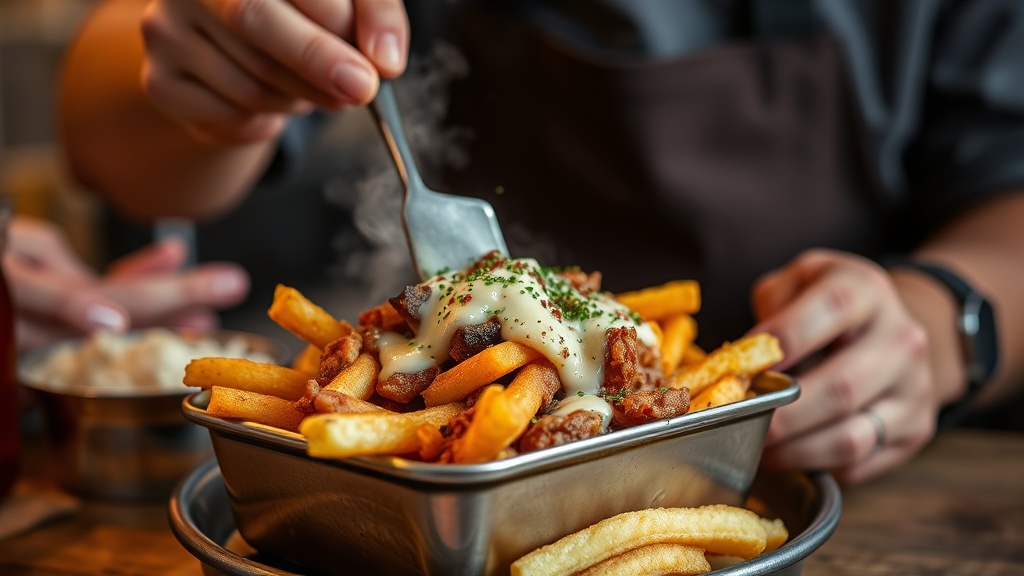
How to Make Authentic Quebec Poutine at Home: A Step-by-Step Guide

This guide walks through making restaurant-quality Quebec poutine in your own kitchen — from sourcing the right cheese curds to nailing the perfect gravy consistency. Whether you're hosting a hockey night with neighbors here in Victoria Ville or simply craving that classic comfort food, you'll learn techniques that rival what you'll find at local spots like Resto-Pub Victoria on Rue Édouard-Montpetit.
What Makes Quebec Poutine Different From Regular Fries and Gravy?
Authentic Quebec poutine follows a specific formula — fresh-cut or double-fried potatoes, squeaky cheese curds (not shredded mozzarella), and brown gravy made from chicken or beef stock. The magic happens when hot fries and gravy slightly melt the curds, creating that signature texture you can't replicate with pre-shredded cheese.
Victoria Ville sits in the heart of Quebec's dairy country, which means access to fresh curds is easier here than almost anywhere else. The Fromagerie Victoria on Rue Notre-Dame Est supplies many local restaurants — and they'll sell you curds made that same morning. Here's the thing: freshness matters. Curds older than 48 hours lose that distinctive squeak against your teeth.
The gravy distinguishes Quebec-style poutine from imitations elsewhere. It should be savory, slightly peppery, and thin enough to pool but thick enough to cling. Many Victoria Ville households have their own family recipes passed down through generations — some starting with a roux, others relying on cornstarch for that glossy diner-style finish.
Where Can You Buy Fresh Cheese Curds in Victoria Ville?
Fresh cheese curds are available daily at Fromagerie Victoria (625 Rue Notre-Dame Est), Marché Tradition (180 Boulevard Jutras Est), and directly from local dairy farms like Ferme Guertin on Route 116. Call ahead — weekend demand gets heavy, especially during hockey season.
The table below compares your main options for sourcing curds around Victoria Ville:
| Source | Price (approx. 1kg) | Freshness | Best For |
|---|---|---|---|
| Fromagerie Victoria | $14-16 | Same-day | Authentic texture, supporting local |
| Marché Tradition | $12-14 | 1-2 days | Convenience, consistent stock |
| Ferme Guertin (direct) | $10-12 | Same-day | Bulk buying, farm experience |
| IGA / Metro | $15-18 | Variable | Emergency backup only |
Worth noting: squeaky curds should feel rubbery and make noise when you chew them. If they don't squeak, they're too old for proper poutine. Store curds at room temperature for 30 minutes before serving — cold curds won't melt properly under hot gravy.
What's the Best Potato for Homemade Poutine Fries?
Russet potatoes (also called Idaho or baking potatoes) produce the crispiest, fluffiest poutine fries due to their high starch content. Yukon Gold works in a pinch, but you'll get denser fries that don't absorb gravy as well. Avoid waxy potatoes like red or fingerling — they turn gummy when fried.
The double-fry method separates decent homemade fries from the outstanding ones served at places like Casse-Croûte Chez Ti-Pit in downtown Victoria Ville. Here's how it works:
- Cut russets into 1/4-inch strips — leave the skin on for rustic texture or peel for restaurant-style
- Soak in cold water for at least 30 minutes (up to 2 hours) to remove surface starch
- Dry thoroughly — moisture is the enemy of crispiness
- First fry at 325°F (160°C) for 5-6 minutes until pale and tender
- Cool completely on a wire rack — at least 10 minutes, or refrigerate up to a day
- Second fry at 375°F (190°C) for 2-3 minutes until golden and crispy
The catch? Your oil temperature matters more than almost anything else. A $30 candy thermometer works fine, but a digital deep-fry thermometer (like the Thermapen) makes the process foolproof. Oil that's too cool results in greasy, soggy fries. Too hot, and you'll burn the outside while the inside stays raw.
Some households in our Victoria Ville community swear by duck fat for the second fry — it adds a richness that vegetable or canola oil can't match. That said, good poutine doesn't require fancy fat. Clean, fresh oil at the right temperature beats expensive fat that's been used too many times.
How Do You Make Authentic Poutine Gravy From Scratch?
Traditional poutine gravy combines chicken and beef stock with a roux or cornstarch slurry, Worcestershire sauce, black pepper, and sometimes a touch of vinegar for brightness. The result should coat a spoon but still pour easily — thicker than soup, thinner than typical Thanksgiving gravy.
This recipe scales well for feeding a crowd during those Saturday nights when half of Victoria Ville seems to gather around screens to watch the Canadiens:
- 3 cups homemade or low-sodium chicken stock
- 2 cups beef stock (dark, rich stock from bones beats bouillon cubes)
- 1/4 cup unsalted butter
- 1/4 cup all-purpose flour
- 2 tablespoons Worcestershire sauce
- 1 teaspoon black pepper (freshly ground)
- Salt to taste (stocks vary — taste before salting)
- Optional: 1 teaspoon cider vinegar or hot sauce
Melt butter in a saucepan over medium heat. Whisk in flour and cook for 2-3 minutes until it smells nutty — this removes the raw flour taste. Slowly add warm stock while whisking constantly to prevent lumps. Simmer for 10-15 minutes until reduced and glossy. The vinegar at the end isn't traditional everywhere, but it cuts through the richness in a way that keeps you going back for another bite.
For an even quicker version, some locals in Victoria Ville use St-Hubert canned poutine sauce — widely available at Épicerie Bédard on Rue Principale. It's not cheating if it gets poutine on the table. That said, homemade gravy takes 20 minutes and tastes significantly better.
What Equipment Do You Need for Restaurant-Quality Results?
You don't need a commercial deep fryer — a heavy Dutch oven (like a Le Creuset or Lodge cast iron) holds heat well and costs a fraction of restaurant equipment. A wire spider or slotted spoon for fishing out fries, a heavy baking sheet for draining, and a saucepan for gravy complete the setup.
Air fryers have improved dramatically, and models like the Philips Premium Airfryer XXL can produce surprisingly decent poutine fries. Toss cut potatoes with a tablespoon of oil, cook at 380°F for 18-20 minutes, shaking halfway through. They won't match double-fried perfection, but they're respectable — and your kitchen won't smell like a fry shack for three days.
For large gatherings (think Victoria Ville's annual Festival de la Poutine, or your own backyard version), consider the outdoor propane turkey fryer route. It heats fast, recovers temperature quickly between batches, and keeps the mess outside. Just observe all safety precautions — hot oil over open flame demands respect.
How Should You Assemble Poutine for Best Results?
Assembly order matters more than you'd think. Layer hot fries on a deep plate or shallow bowl, distribute room-temperature curds evenly across the surface, then ladle hot gravy directly over everything. The gravy should hit the curds first — that's what creates the partial melt that defines proper poutine.
Don't toss everything together like a salad. The beauty of poutine is in the layers — some curds fully melted, others still squeaky, some fries soft from gravy, others crisp underneath. Serve immediately on warmed plates (2 minutes in a low oven does the trick). Cold plates steal heat fast.
Classic poutine stands alone, but variations have their place. In Victoria Ville, you'll find galvaude (add shredded chicken and peas) at several casse-croûtes, and the "poutine italienne" (meat sauce instead of brown gravy) has its devoted followers. For home cooks, pulling leftover smoked meat from Dunn's Famous (available at Marché Tradition) makes an excellent addition when you want something heartier.
Making poutine at home connects you to a Quebec tradition that's deeper than just comfort food. When you use curds from the same dairy farms that supply Victoria Ville's institutions, when you perfect your gravy technique through trial and error, you're participating in something our community has been doing for generations. The results — crispy, salty, squeaky, savory — speak for themselves. Grab a fork.
Steps
- 1
Prepare the Perfect Double-Fried Potatoes
- 2
Source Fresh Squeaky Cheese Curds
- 3
Make Authentic Brown Gravy from Scratch